Affiliate disclosure: This article contains Amazon affiliate links. International Travel Planning may earn a commission from a qualifying purchase, at no additional cost to you. Review current product, eligibility, coverage, price, and terms with the provider before purchasing.
The beach-day travel tip is simple: if your accommodation still uses a physical room key, decide where it will live before you walk out the door. A loose key in a pocket can disappear into a towel, get uncomfortable while swimming, or become one more thing to keep track of while you are trying to relax. With the property’s permission, a portable key lockbox can be one practical option for carrying less on a beach day.
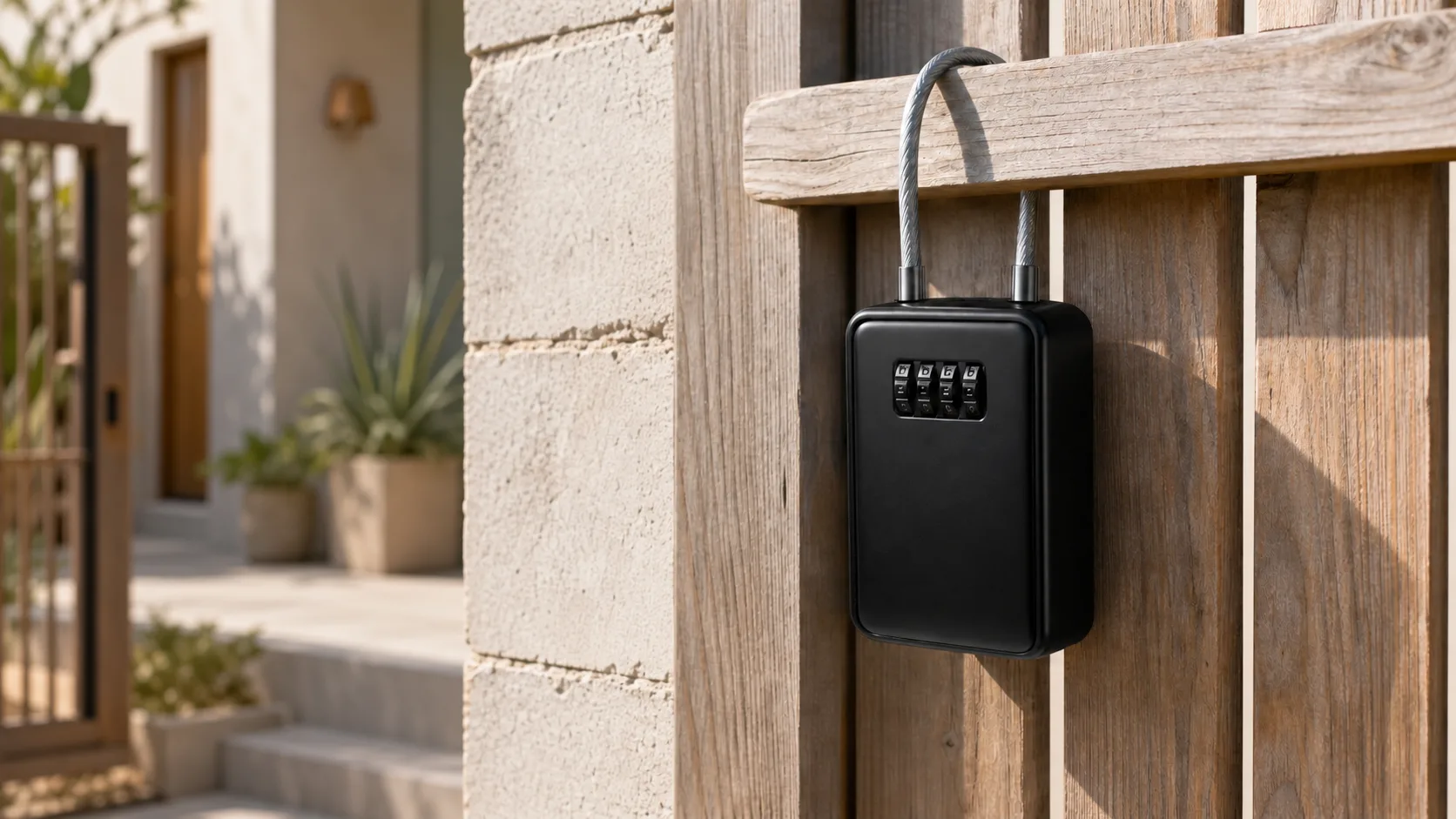
The Iron Lock Medium Key Lock Box with Code is one example. It has a steel cable shackle, built-in key hooks and catch tray, a dial cover, and no batteries. Those features may be useful for keeping a key in one place, but the lockbox is not a substitute for a property’s own procedures. Think of it as an option to discuss with the person responsible for the accommodation—not a universal solution you can attach anywhere.
Start with the property’s rules
Ask before you buy, pack, or attach anything. A hotel, host, property manager, or owner may have a specific key-return process, a front desk that will hold the key, or a reason they do not allow a temporary lockbox. The best plan is the one they approve.
When you ask, be specific: explain that you have one physical key, want to spend a few hours at the beach, and would like to know whether there is an approved place or method for leaving it. If the answer is no, that is useful information too. A waterproof pouch secured to your person or an approved front-desk arrangement may be the better fit.
When a small lockbox can make sense
A portable key lockbox may be worth considering when all of the following are true:
- Your hotel, host, or property manager has explicitly said it is allowed.
- You have a physical metal key and will be away for a short beach, pool, or water-activity outing.
- There is an approved location and you are not blocking access, attaching it to someone else’s property, or creating a problem for staff.
- You have a backup plan if the code is forgotten, the weather changes, or someone in your group returns early.
The goal is not to make the day complicated. It is to avoid the familiar routine of checking every pocket, digging through sand, and wondering whether the one thing needed to get back into the room is still where you left it.
Keep only the key inside
Treat the lockbox as a key holder, not a tiny storage unit. Never put a room number, address, ID, booking paperwork, payment information, passport, or itinerary inside. Those details make a lost key much more revealing than it needs to be.
Choose a code that is not obvious, and do not use a birthday, room number, or part of a phone number. Before leaving, close and open it once or twice with the key inside so you are not learning the process for the first time in a parking area or after sunset. If you are traveling with someone else, agree on the code and the backup plan before heading out.
A quick beach-day routine
Before leaving the room, take a photo of the property’s contact information, keep it available offline, and make sure at least one person has enough phone power to reach the host or front desk. Carry only the cash, card, and identification you actually need for the outing. Keep those items on your person rather than treating any portable box as a place for everything valuable.
At the beach, do not announce where the key is stored. Return to it as quietly as you left it. If anything about the location feels wrong, skip the lockbox and use the property’s approved alternative instead.
Other ways to handle a physical key
There is no prize for using a gadget if a simpler solution works better. Depending on the property, you may be able to ask the front desk or host to hold the key, follow an approved key-return process, or use a waterproof pouch secured to your person. Those options can be easier when you are changing beaches, moving between activities, or traveling alone.
If you do use a pouch, test its closure before the trip and keep the key separate from anything that cannot get wet. A small routine helps: key plan, phone plan, and one agreed meeting point before everyone heads toward the water. That is usually enough preparation without turning a relaxed afternoon into a security exercise.
For more small-item packing ideas, browse our Travel apps and tools guides. The point is to reduce one small source of stress so the beach day actually feels like a beach day.