Affiliate disclosure: This article contains Amazon affiliate links. International Travel Planning may earn a commission from a qualifying purchase, at no additional cost to you. Review current product, eligibility, coverage, price, and terms with the provider before purchasing.
This translation earbuds travel tip is for the moments when a trip stops being a list of sights and becomes a real conversation. You may need directions, want to understand a driver’s suggestion, or meet someone you would genuinely like to know better. Passing a phone back and forth can work, but it can also make a simple exchange feel slow and formal.
Translation earbuds are not a substitute for learning a few local greetings or for good judgment. They can, however, give a traveler another way to participate when a shared language is limited. The useful part is not sounding perfect. It is staying present enough to listen, ask a follow-up question, and keep a small moment from ending because everyone is staring at a screen.
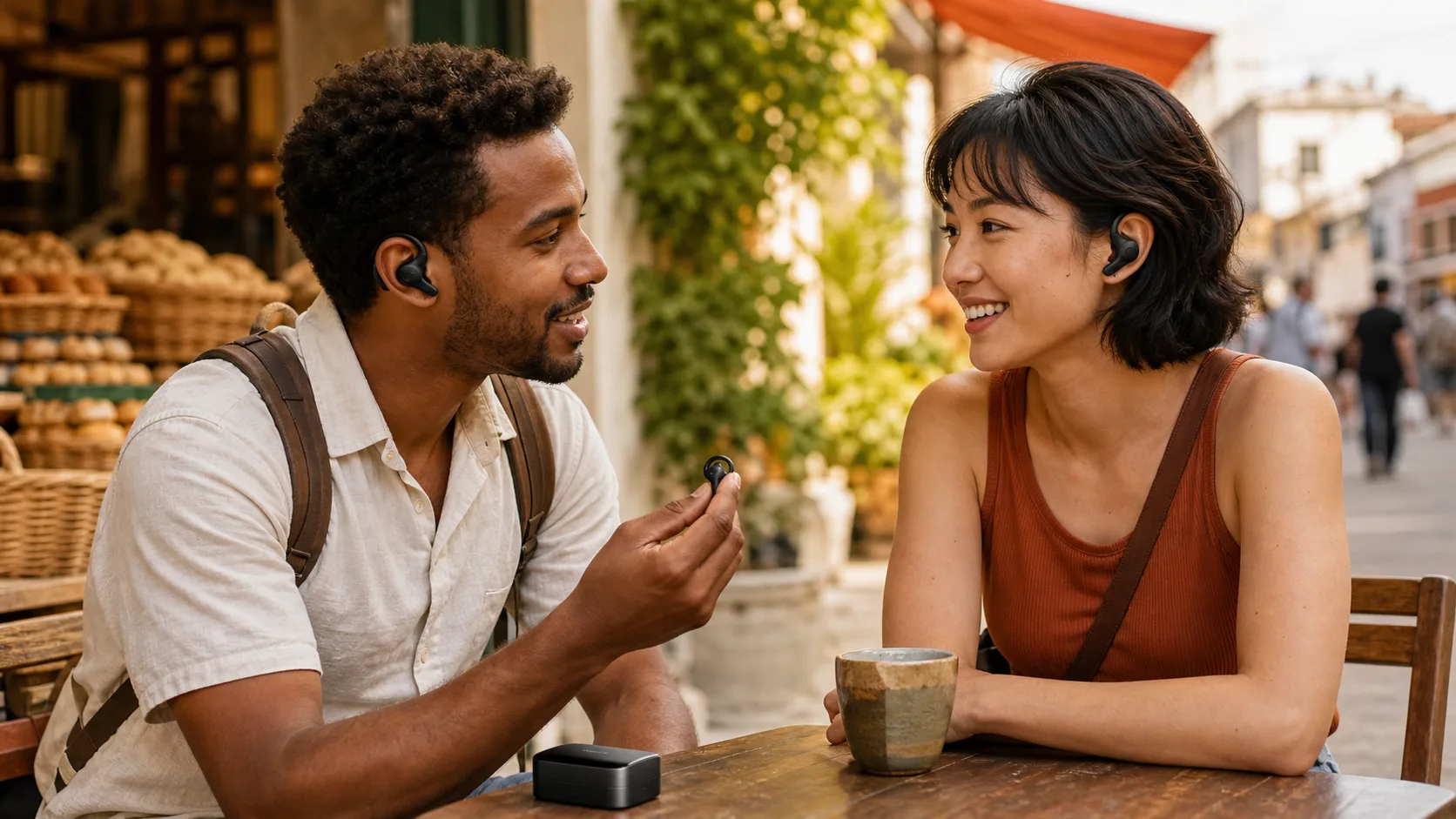
With a pair such as the Timekettle W4 AI Interpreter Earbuds, one person can wear an earbud while the other uses the second. That setup may feel more natural than taking turns holding a phone between two people. Exact features, supported languages, app requirements, and connectivity options can change, so check the current product listing and make sure it works with your phone before buying.
A tool for unplanned conversations
The best use for translation earbuds is usually not a formal transaction. It is the unexpected human part of the day: asking a local where they actually eat after work, understanding why a shop owner recommends one route over another, or talking with an artisan about an item before deciding whether to buy it.
Those exchanges can be meaningful even when they are short. A translation tool may help you move past the first practical question and ask something more interesting. What is good to order here? Is there a quieter way to walk back? What do you like about this neighborhood? The answer may still be imperfect, but the conversation has a chance to continue.
That is why this is a travel tip rather than a promise. Translation technology can misunderstand accents, background noise, slang, or fast speech. Treat it as help, not as an authority. If an answer involves a price, address, booking detail, medication, legal matter, or safety decision, confirm it another way before relying on it.
Prepare before the conversation starts
Do a small setup check before leaving your hotel or the airport. Charge the earbuds and your phone. Install any companion app the product requires. Download any available language packs or offline tools before your data connection becomes unreliable. If you expect to use a local SIM or eSIM, confirm it is working first.
It also helps to practice the basic flow while you still have privacy and time. Learn how to start a conversation mode, switch languages, adjust volume, and return to your normal phone audio. A tool is much more useful when you already know where the important buttons are.
Keep your own travel basics available offline as well: your lodging address, a map screenshot, emergency contacts, and transport details. Translation earbuds can help explain a question, but they should not be the only place you store important information.
Use them with good manners
Always ask before offering someone an earbud. A simple gesture and a friendly question go a long way. Some people will be curious; others may prefer a phone screen, hand signals, or no translation tool at all. That is fine. The point is to make communication easier, not to pressure someone into using technology.
Cleanliness matters too. Carry a small case and keep the earbuds clean before sharing one. In a noisy market, on a windy street, or in a crowded station, moving a few steps to a calmer spot may improve the conversation more than changing an app setting.
Be especially careful with privacy. Do not use a translation device to record, photograph, or share a private conversation without clear permission. Avoid entering passwords, account details, or personal information into an app while you are trying to solve a quick travel problem.
Good situations and bad situations
Translation earbuds can be handy when you have time for a normal conversation: a market visit, a casual restaurant recommendation, a local class, a tour meeting point, or a friendly chat during a long ride. They can also be a useful backup when you want to make an effort beyond a memorized phrasebook.
They are less appropriate when the stakes are high or the information must be exact. Do not depend on them alone for immigration questions, medical instructions, police reports, contracts, banking, or emergency help. Use official staff, certified interpreters, or trusted written information in those cases.
Keep the expectation simple
You do not need a gadget to be a respectful traveler. A smile, patience, a few local words, and willingness to be understood imperfectly still matter most. But translation earbuds may make certain moments less awkward and more open—especially when you would rather look at the person in front of you than spend the whole conversation passing a phone across the table.
If that kind of connection would make your trip easier, this may be a useful tool to consider. Compare the current listing, compatibility details, and return policy before buying, then test it before the day you need it. You can also browse our Travel apps and tools guides.