Affiliate disclosure: This article contains Amazon affiliate links. International Travel Planning may earn a commission from a qualifying purchase, at no additional cost to you. Review current product, eligibility, coverage, price, and terms with the provider before purchasing.
The travel bag that helps me skip the baggage carousel is not a magic answer to airline rules, but it has made my short trips easier. There is a particular kind of airport freedom that starts when you walk off the plane and keep moving. On my trips, I have used this BANGE travel bag strapped to my back instead of relying on a checked suitcase. While other travelers head toward baggage claim, I can often keep going toward the exit with everything I packed already with me.
That is the benefit I notice most: less waiting, less dragging luggage through a terminal, and one less hand occupied while I am trying to find a ride or get oriented in a new place. It does not mean every trip can be packed this way, but for a shorter itinerary it can make arrival feel much simpler.
Why it works for my short trips
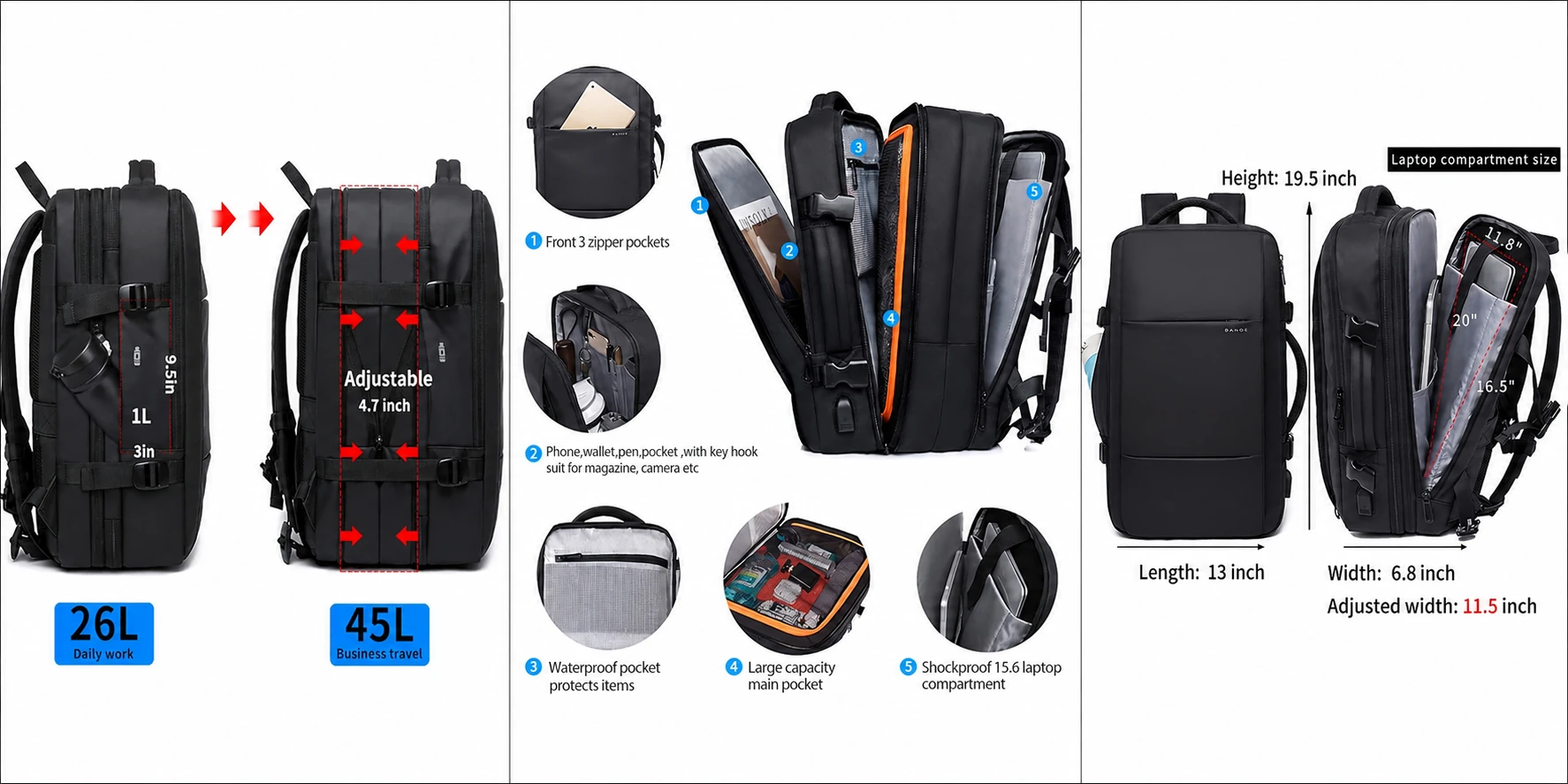
What I like most is how easy it is to use as a backpack while still packing more like a carry-on-style bag. In my experience, it holds as much as—sometimes more than—my usual carry-on suitcase. I can keep travel essentials together, avoid digging through a larger checked bag, and move through terminals without dragging luggage behind me.
I have personally traveled with it on my back without airline personnel stopping or questioning me about it. That is my experience, not a promise of what will happen on every trip. Airlines set their own baggage rules, and those rules can depend on the carrier, fare, aircraft, route, and how fully the bag is packed. Measure it before you leave and check your airline’s current allowance.
Pack for the bag, not just the destination
This style of bag works best when I pack with a short trip in mind. I start with the non-negotiables: a small toiletry kit that follows the carrier’s current rules, a change of clothes, basic electronics, medication, and whatever I will need during the first night. Then I add layers and shoes only if they earn their space.
Rolling clothing or using small packing cubes helps me see what is actually coming with me. I keep the things needed in the airport—phone charger, headphones, travel documents, a light layer, and snacks—in a pocket I can reach without unpacking the whole bag. The goal is not to turn every trip into a packing contest. It is to keep the bag comfortable enough to carry and organized enough to use.
Check the allowance before leaving home
Do not rely on a bag looking smaller when it is worn as a backpack. Airlines may assess its actual dimensions, and a bag that works for one carrier or flight may not work for another. Check the current carry-on and personal-item rules for the ticket you purchased, then measure the bag after it is packed—not while it is empty.
Be especially careful with a fully expanded bag, bulky outer pockets, or a second item that could make the setup harder to manage. If the flight has strict limits, move heavy items into the allowed item that best fits the rules, wear the bulkiest layer, or plan for a different bag. It is better to know the tradeoff before arriving at the gate.
The inserts are worth considering
If you are considering this bag, also check whether compatible organizational inserts are available separately for the exact version you order. The right insert can make it easier to keep smaller items from disappearing into one large packing space. I find that a little structure makes a backpack-style bag feel less like a deep pile of clothes and more like something I can live out of for a few days.
The exact accessories and bag versions can change, so confirm compatibility on the product listing before ordering. You may prefer packing cubes, a simple pouch system, or no insert at all. The useful choice is the one that lets you find your essentials without emptying the entire bag onto a hotel bed.
What skipping baggage claim changes
When I can travel without checking a bag, the arrival sequence feels cleaner. I can focus on immigration, finding data for my phone, locating the pickup point, and getting to lodging instead of building in time for a carousel. It is also easier to change plans if a flight is delayed or a connection is tight, because everything I need is already with me.
That does not make checked luggage a bad choice. Longer trips, special equipment, family travel, and weather changes may call for it. This is simply a practical option when traveling light fits the trip. For an arrival checklist once you are off the plane, see what to take care of when you land.