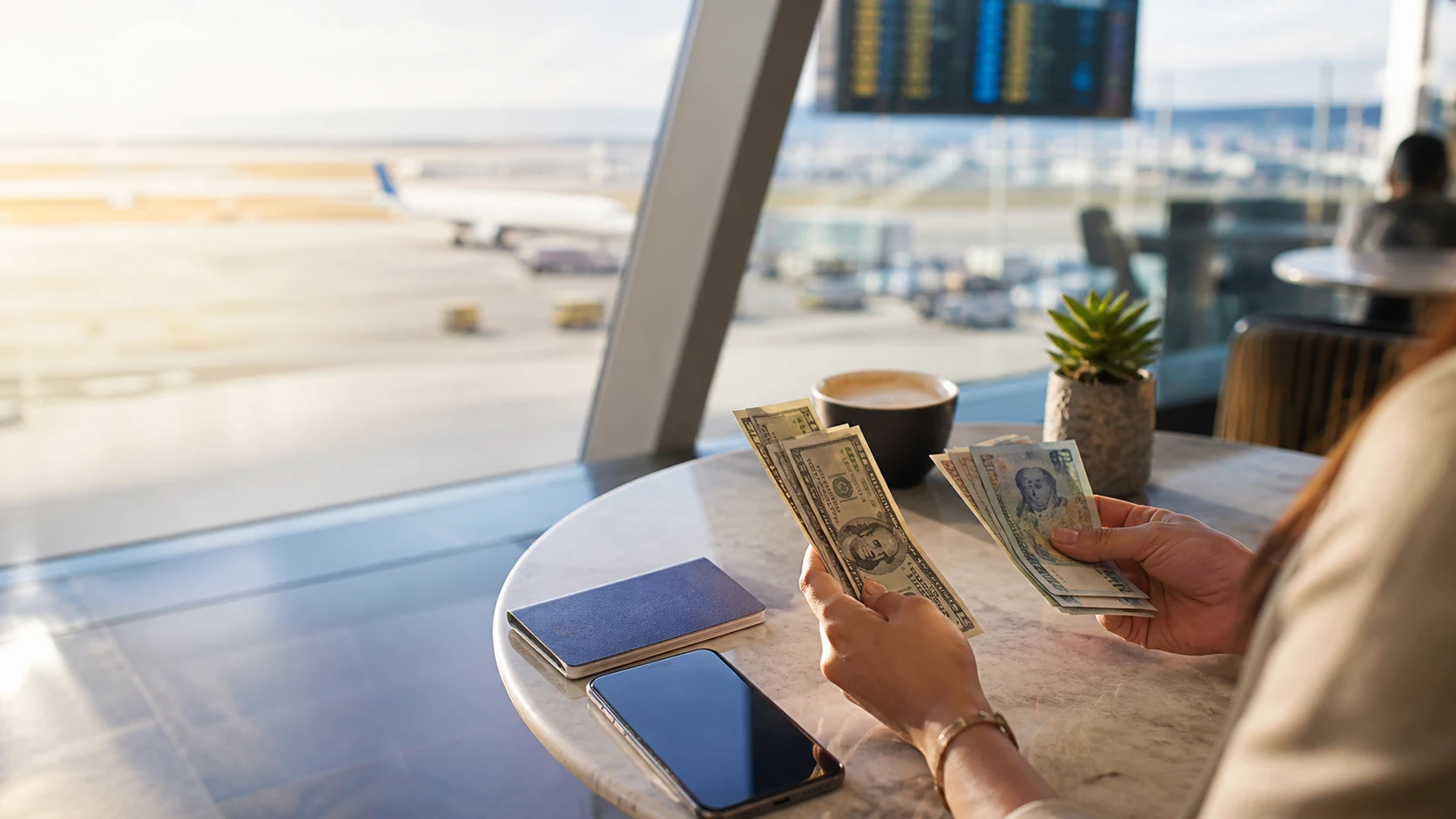
Currency exchange is easy to leave until the last minute, but a little preparation can prevent expensive or frustrating arrival-day decisions. The key is knowing where to exchange money, what fees apply, and how to handle the cash you carry.
This guide covers where to exchange money, how to avoid rushed airport decisions, and why bill condition can matter. Pair it with our airport arrival checklist so your cash plan fits the rest of your first-day logistics.
The Airport Exchange Trap: Convenience vs. Cost
For many travelers, the airport currency exchange counter is the first stop upon arrival or departure. It offers undeniable convenience: you are already there, and you have immediate access to local cash for taxis, buses, or a quick meal. However, this convenience comes at a steep price.
Airport exchange kiosks can charge a premium for convenience. They may offer a weaker exchange rate, add a fee, or build their margin into the rate itself. They are not always the worst choice in every airport or country, but NerdWallet reported examples of airport exchanges charging 14% more than the IMF rate, with some premiums above 17% [S1].
The Strategic Exception: There is one scenario where using an airport kiosk makes sense: if you arrive in a country with limited banking infrastructure or if you need immediate cash for essential transport and have no other options. For example, in Malawi, airport exchange kiosks are run by competing banks that offer competitive rates with no exchange fees [S8]. In such cases, exchange only the minimum amount required for your immediate arrival needs—such as a taxi fare, a bottle of water, or a tip. Avoid exchanging large sums at the airport. Instead, plan to withdraw local currency from an ATM or visit a bank in the city center once you have settled in. This hybrid approach balances the need for immediate liquidity with the goal of securing better long-term rates.
Bank vs. ATM vs. Exchange Counter: Where Should You Go?
To maximize the value of your money, you must compare the real amount received after fees across different methods. Generally, the hierarchy of cost-effectiveness follows this pattern: local bank branches and ATMs usually offer the best rates, followed by dedicated currency exchange shops in city centers, with airport kiosks trailing at the bottom.
Using Your Bank
Many major banks offer competitive exchange rates for tourists who plan ahead. You can often order foreign currency online or visit a branch to pick it up before your trip. The primary advantage is transparency: you know the rate and any fees upfront. However, this method requires planning. If you wait until the last minute, you may miss the cutoff for ordering cash, leaving you with fewer options. Notably, most banks offer currency exchange services that beat airport rates by 5 percent or more [S9].
Using ATMs Abroad
Withdrawing local currency from an in-network ATM can be a competitive option, especially when your card has low or no foreign-transaction fees [S5]. It also lets you withdraw only what you need instead of carrying a large amount of cash.
Compare your home bank's foreign-transaction fee with any local ATM fee before treating an ATM as the automatic winner. Many cards charge a foreign-transaction fee of about 2% to 3% [S3]. When a terminal or ATM offers Dynamic Currency Conversion (DCC), pause and compare the offered rate rather than accepting it automatically. Visa notes that accepting or declining DCC does not affect your ability to complete an international purchase or withdrawal [S2].
Dedicated Exchange Counters
In many tourist-heavy cities, dedicated exchange bureaus offer rates that are competitive with banks and sometimes even better than ATMs if you negotiate or look for "no commission" deals. However, be wary of "zero commission" signs; these often hide their costs in a poorer exchange rate [S7]. Always compare the final amount of local currency you receive against the interbank rate to ensure you are getting a fair deal.
Protecting Your Cash: The Condition Matters
A critical aspect of international currency exchange that many travelers ignore is the physical condition of U.S. dollars if you are bringing them abroad. In many parts of the world, particularly in regions with unstable currencies or high inflation, U.S. dollars are widely accepted as a secondary currency for goods and services. However, foreign banks, exchange vendors, merchants, and other cash handlers may decline visibly damaged U.S. bills.
What Constitutes "Damaged"?
Damage is not limited to torn notes. In destinations where vendors are strict about U.S. cash, avoid bringing notes with:
- Torn or ripped notes: Even a small tear can render a bill unusable.
- Heavily wrinkled or creased bills: Extreme folding can make bills difficult for machines to authenticate.
- Marked or ink-stained notes: Any writing, stamps, or stains are red flags for fraud prevention systems.
- Taped bills: A taped note can draw extra scrutiny.
Money exchange vendors will promptly reject dollar bills that have the slightest folds, tears, stains, creases, faded color, worn spots, or pen marks [S4].
Practical Cash Habits
Practical cash habit: There is no universal global acceptance policy for worn notes, so inspect U.S. cash before leaving home. Replace visibly damaged notes and, if you expect to need cash, ask your bank for cleaner bills several days to a week before departure. This is traveler guidance, not a guarantee that a bank can provide new notes.
Upon arrival, continue this vigilance. When you receive change from exchange counters, stores, taxis, or vendors, inspect the bills immediately. If you notice a damaged note, politely ask for another visibly damaged or suspicious note before leaving the counter. This simple habit prevents the frustration of trying to spend unusable cash later in your trip.
What Happens to Damaged Bills?
If you bring irreparably damaged U.S. currency back to the United States, do not expect a quick refund at your local bank branch. The Federal Reserve does not accept deposits of mutilated currency from banks [S12]. In this case, special examination by professionals at the Bureau of Engraving and Printing (BEP) is required before any exchange is made.
Arrival-Day Cash Checklist
To ensure a smooth financial start to your journey, follow this checklist on arrival day:
- Verify Immediate Needs: Have a small amount of local currency ready for transport and immediate expenses if you did not exchange at the airport.
- Inspect All Bills: Check every note you receive for damage. Do not assume that because it is legal tender, it will be accepted locally.
- Secure Your Cards: Notify your bank of your travel plans if required by their policy, and ensure your cards are enabled for international use.
- Locate ATMs: Identify a bank-operated or in-network ATM near your accommodation before you need more cash.
- Plan the rest of arrival day: Keep your cash plan simple alongside your first-24-hours travel plan rather than trying to solve every money decision at the airport.
Frequently Asked Questions
Is it better to exchange money at the airport or in the city?
It is generally better to exchange money in the city or use an ATM for better rates. Airport counters charge premiums for convenience, often exceeding IMF rates by 14%–17% [S1]. Use airport exchanges only for minimal immediate needs.
What should I do if I have a torn or damaged U.S. dollar bill abroad?
Some foreign banks, exchange vendors, merchants, and other cash handlers may decline visibly damaged U.S. bills [S4]. Inspect your cash before leaving home and ask your bank for cleaner notes several days to a week ahead. If you receive a damaged note abroad, politely ask for another one immediately.
How much local cash should I carry?
Carry enough for immediate expenses such as transport, food, and small tips. Then compare the next withdrawal or exchange against the plan in your travel budget guide, rather than converting a large amount simply because you have arrived.
ATM vs. Cash Exchange: Which is cheaper?
An in-network ATM may offer a competitive rate, but it is not automatically cheapest. Check your bank's foreign-transaction fee, any local ATM fee, and the final amount offered by a city exchange counter before deciding [S3][S5].
Can I exchange leftover currency on my way home?
Yes, many travelers look for ways to manage leftover funds before returning home [S6]. However, rates for converting unused foreign currency back to your home currency are often poor. It is usually more cost-effective to spend remaining local cash or gift it to others traveling to that destination.
Sources / Before You Book
- [S1] Traveling Abroad? Order Currency Before You Go - NerdWallet
- [S2] What is Dynamic Currency Conversion? | Visa Travel
- [S3] Traveling Abroad: Payment Methods & Foreign Transaction Fees
- [S4] Bring Crisp, Clean U.S. Dollar Bills When You Travel to These Countries
- [S6] When Does Currency Exchange Help Global Travelers Today
- [S7] Where Is the Best Place to Exchange Foreign Currency?
- [S8] Currency Exchange Tips for International Travel (2026 Guide)
- [S9] Traveling soon? What to lookout for when exchanging money - Bankrate
- [S12] What to Do with Ripped, Torn or Damaged Money