Affiliate disclosure: This article contains Amazon affiliate links. International Travel Planning may earn a commission from a qualifying purchase, at no additional cost to you. Review current product, eligibility, coverage, price, and terms with the provider before purchasing.
The check-out gap travel tip is for those long, in-between hours when your room is gone but the next part of the trip has not started. Checkout is at 11. Your night train is not until 8. The hotel is holding your main suitcase, and you want to wander through a market, have lunch, and enjoy the afternoon without repeatedly emptying an overstuffed day bag to find a passport, spare card, or emergency cash.
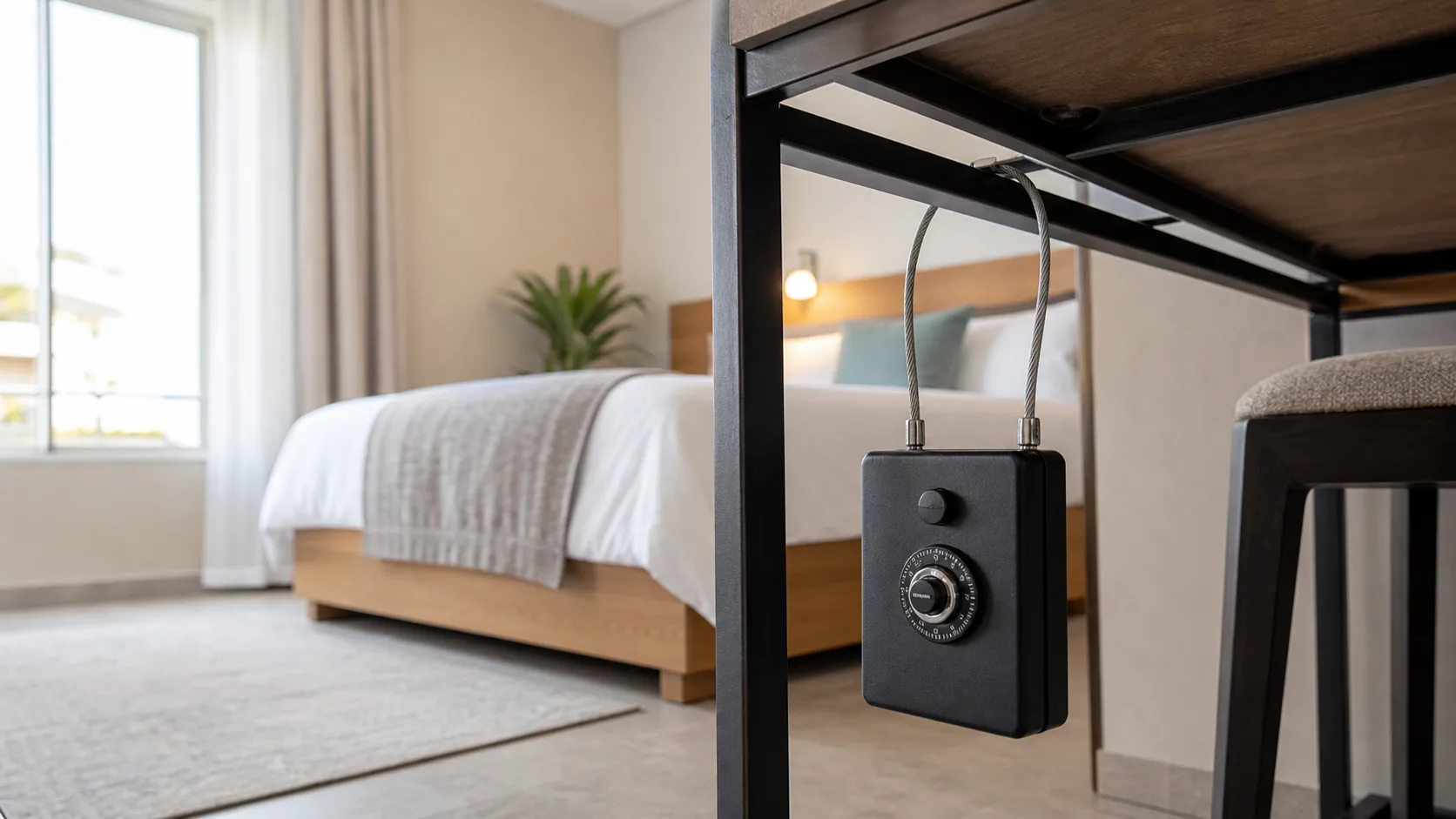
That awkward stretch is where a small portable personal safe can be useful as an organizer—not as a promise that valuables are protected from every risk. The Master Lock 5900D Portable Personal Safe has a resettable combination and an included cable that can be attached to a fixed object where the owner or venue explicitly allows it, or used as a carrying handle.
Decide what the day actually requires
Before you leave the hotel, separate the things you must have from the things you are only carrying because you have not made a plan. Keep your passport, primary payment method, phone, and essential medication on your person when practical. Put less critical small items together so you are not opening every pocket each time you need one thing.
For some travelers, that is where a small portable safe earns its space: it keeps a spare card, charging cable, backup cash, or a few small items in one recognizable container inside a larger day bag. It is a way to make the bag easier to manage, not a reason to become careless with it.
When it might help
A portable safe may be useful when:
- You want small essentials kept together inside your own bag during a long in-between day.
- Your accommodation, venue, or luggage-storage provider has explicitly approved the way you plan to use it.
- You have a simple backup plan if your route, check-in time, or access to the item changes.
- You understand that the item remains your responsibility rather than assuming the cable or combination makes it untouchable.
If a property explicitly allows it, the included cable may also be attached to an appropriate fixed item in your room while you are out. That can add friction against an opportunistic grab by anyone entering the room, but it is not a guarantee that items cannot be taken. It should not replace a hotel safe or the property’s own security procedures.
Use the check-out gap to travel lighter
The better move is often to leave the large suitcase with the hotel or a reputable luggage-storage provider, then make a smaller plan for the hours ahead. Pack a light layer, water, charging cable, basic toiletries, and the items you will realistically use before the train, bus, or next check-in. A bag that is easy to carry makes it more likely that you will enjoy the afternoon instead of treating it like an extended wait in a lobby.
If you are headed to a station or airport later, leave extra time for the transfer. Check where the luggage-storage counter closes, how you will get back to the property, and whether you will need cash or data for the route. Those details matter more than finding a perfect place to stow every item.
Keep the limits in mind
Never leave a bag unattended, and do not attach anything to transit property, a rental fixture, or another person’s belongings without clear permission. A portable safe is a convenience layer; it does not replace hotel staff, a hotel safe, personal awareness, travel insurance, or a plan for loss or theft.
Do not put a room number, address, itinerary, full wallet, or all backup credentials together inside. Splitting items between separate places you control can be more useful than trying to create one perfect hiding place. If a card, passport, or cash reserve would cause a serious problem if lost, keep it with you or use an approved service that accepts responsibility for holding it.
A simple in-between-day checklist
Before checkout, confirm where the main luggage will stay and take a photo of the claim ticket if one is issued. Charge your phone, save the next accommodation’s address offline, and decide when you need to return for your bag. Keep a note of the local emergency contact and the hotel’s front-desk number. Then take the afternoon one stop at a time.
Alternatives include asking the hotel desk or luggage-storage provider what they can hold, keeping essential items on your person, or skipping the extra gear altogether when your day bag has a secure pocket. For another small-item travel tip, see our beach-day room-key guide.